

Advancing Hope: FTD Staff attend the Amyotrophic Lateral Sclerosis Motor Neuron Disease Annual Symposium
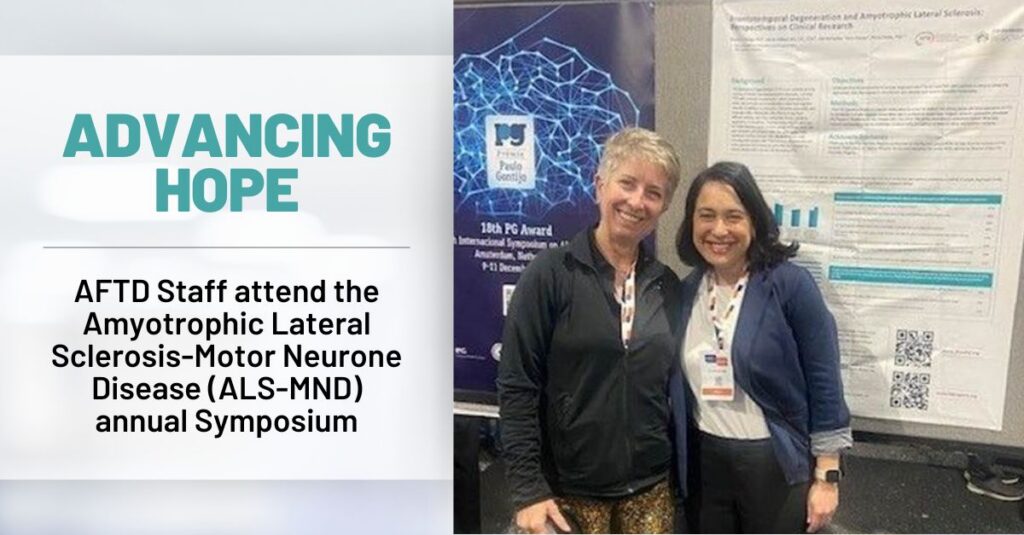
Shana Dodge, PhD, AFTD’s Director of Research Engagement, and Kim Jenny, MS, LCGC, AFTD’s Manager of Genetic Initiatives, attended the Amyotrophic Lateral Sclerosis Motor Neuron Disease Annual Symposium, held in San Diego in December 2025. While often used interchangeably, MND is an umbrella term for diseases that cause degeneration in motor neurons, with ALS being on of these diseases. This international meeting is the largest medical and scientific conference specific to MND/ALS and is the premier event in the MND research calendar for discussion on the latest advances in research and clinical management.
There is a close relationship between ALS and FTD. A variant in the C9orf72 gene is the most common cause of both genetic FTD and ALS, and both FTD and ALS can present within the same family. While less common, variants in other genes can also cause both FTD and ALS. FTD and ALS can present with a combination motor and cognitive disorder. In addition to changes in behavior, personality, and language skills common to FTD, individuals with FTD-ALS may have difficulty walking, standing, using their hands, speaking, swallowing, or breathing. Further, apparently sporadic cases of FTD-ALS also occur and sporadic FTD caused by TDP-43 proteinopathy resembles the molecular pathophysiology of ALS.
At this meeting, AFTD staff presented FTD Disorders Registry data on perspectives of people with FTD-ALS and their care partners on aspects relating to participating in research, such as how well they understand research concepts and what factors would make it easier to participate in research. These data are critical for researchers who design and run trials that include people with both FTD and ALS.
By Category
Our Newsletters
Stay Informed

Sign up now and stay on top of the latest with our newsletter, event alerts, and more…


