

Recognizing the Easily Mistaken Signs of Young-Onset Dementia
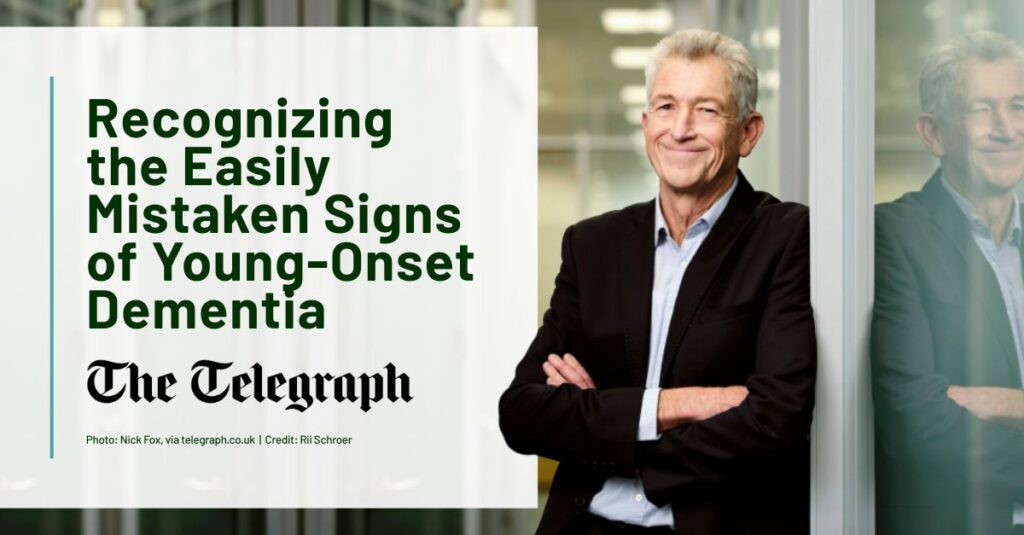
Signs of young-onset dementias such as FTD are difficult to diagnose, according to an article on The Telegraph website (paywall; one week free access with registration), because few think of dementia appearing in someone in their 50s, 40s, or even younger.
When Andre Yarham received his diagnosis of FTD at just 22 years old, it shattered assumptions about who this disease affects. Andre’s story was a reminder that FTD can impact adults of virtually any age. Nick Fox, MD, a consultant neurologist at the National Hospital for Neurology and Neurosurgery in London, has devoted three decades to treating young-onset dementia, working with patients as young as 23.
In the article, Dr. Fox shared insights that could help families recognize symptoms sooner, when support can make the greatest difference.
Motivation Vanishes
We all have days when ambition feels out of reach. But when that lack of drive persists for weeks or months, it may signal something deeper than ordinary fatigue.
Dr. Fox explains that our brain’s frontal lobes fuel our motivation and initiative. When FTD affects these areas, individuals may lose all desire to engage with life, even when others organize activities for them. Those with young-onset dementia may experience profound apathy, losing what Dr. Fox describes as their “get up and go,” he told The Telegraph.
This isn’t laziness—it’s a neurological change that robs people of the spark that makes them want to participate in their own lives.
Personality changes can emerge in unexpected ways. Someone might suddenly choose unusually vibrant clothing, develop rigid routines, or become fixated on particular foods or television programs. Dr. Fox notes that individuals may begin consuming excessive amounts of sweets or display other dramatic alterations in their habits.
For families watching someone transform before their eyes, these shifts can feel bewildering.
A Heartbreaking Symptom
Perhaps the most heartbreaking symptom Dr. Fox described–and the one perhaps most likely to be confused with a psychological issue—is diminished empathy. People living with early-onset dementia can lose their ability to recognize and respond to others’ emotions.
Dr. Fox recalled a woman in her thirties, overwhelmed by suddenly becoming a caregiver to her partner with FTD, sat on the kitchen floor sobbing. Her once-caring partner simply stepped over her to reach the washing machine. This wasn’t cruelty—it was the disease stealing his ability to understand that she needed comfort.
Desperate for Information
In another instance, Dr. Fox heard from the spouse of a rugby player in his thirties who had developed early-onset dementia. She explained that staff at their neighborhood dementia day center had requested she no longer bring her husband to the facility, saying that most participants were elderly women and the staff felt unable to accommodate him. “It was clear people desperately wanted information and help.
“Very quickly, we realised the real value lay in the conversations over coffee at the end, rather than access to doctors like me. The benefit came from meeting others who had become experts through lived experience of the disease, and exchanging practical tips and advice on how to cope.”
The AFTD 2026 Education Conference is coming to the Hyatt Regency Lake Washington on April 30 – May 1, 2026! People diagnosed, care partners, families, friends, healthcare professionals, and researchers are invited to connect with people who understand the journey, learn about available resources and supports, and engage with experts to gain insight on the latest in FTD research and approaches to care.
For more information about FTD support and resources, visit theaftd.org or call the AFTD HelpLine at (866) 507-7222.
Further reading:
Read the article on the Telegraph’s website
Download diagnostic checklists for both families and physicians
By Category
Our Newsletters
Stay Informed

Sign up now and stay on top of the latest with our newsletter, event alerts, and more…


