
FTD Science Digest – Collaboration for Future FTD Clinical Trials: the 2025 FTD Research Roundtable

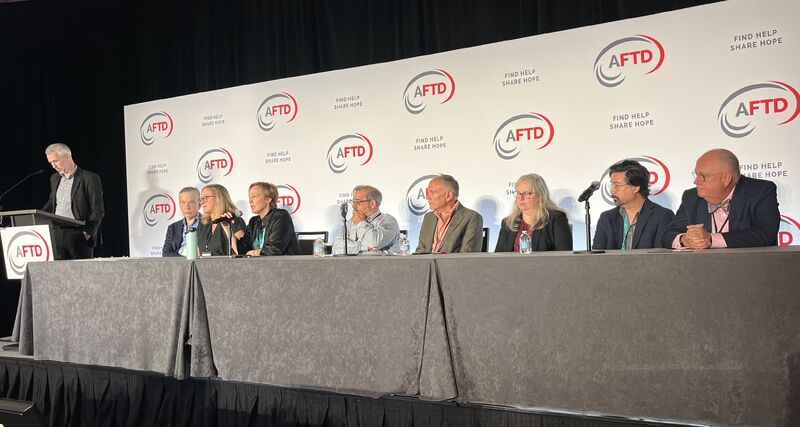
This September marked the third annual FTD Research Roundtable hosted by AFTD. This event brings together diverse stakeholders, particularly industry partners, working towards addressing barriers to finding disease-modifying therapies for FTD. Each year is focused on a new topic. This year’s title was “outcome measures and statistical power in FTD clinical trials,” which are important tools needed to determine whether a treatment is effective.
The Roundtable is just one of AFTD’s approaches to supporting effective clinical trials. Examples of challenges in clinical trials include difficulty enrolling limited eligible populations, identifying the right measures for inclusion criteria, disease progression, drug impact, and navigating any financial, logistical, and infrastructure barriers across clinical sites.
This year the Roundtable is composed of 12 pharmaceutical companies, each at various stages of drug development for FTD, and 4 nonprofit organizations including AFTD. The 87 attendees at this year’s event included academic researchers, industry partners, nonprofit organizations, regulators (the U.S. Food and Drug Administration (FDA)) and the European Medicines Agency (EMA), people with lived experience, and AFTD Board and staff.
The 2025 FTD Research Roundtable was led by Academic Co-Chair Jonathan Rohrer, MD, PhD from University College London, and Industry Co-Chair Arthur Simen, MD, PhD, from Johnson & Johnson (previously at Takeda Pharmaceuticals), who planned the agenda as part of the larger leadership committee. That group includes Dr. Michelle Campbell of the FDA and Dr. Steffen Thirstrup of the EMA.
Some highlights of the meeting discussions included:
- Harmonization of outcome assessments from ALLFTD and GENFI are underway and may offer improved tracking of disease progression.
- Careful validation protocols can enable remote assessment tools (i.e., tools that can be used at home) for use in clinical trials to support in-clinic assessments.
- More inclusion of qualitative data on the lived experience of disease is warranted to support regulatory understanding of the clinical meaningfulness of a given outcome assessment.
- Proper utilization of existing longitudinal data (such as Natural history data), offer the potential to reduce the number of trial participants, in-person site visits, and placebo exposure.
With FTD being more rare than other related disorders such as Alzheimer’s, a repeated challenge discussed in these meetings is where to find clinical data and biosamples to support new research. Rather than each research entity creating their own resources, and placing additional burden on research participants, how do we ensure data is shared and used to its full potential?
AFTD is working towards the answers to these questions and would like to thank everyone touched by FTD who has participated in research – whether as part of a large natural history study or more individual studies. Participation in research provides researchers with the data that is necessary to ensure scientific progress.
To learn more about participating in research, check out the FTD Disorders Registry.
Sign up to receive FTD Science Digest in your inbox six times a year!
By Category
Our Newsletters
Stay Informed

Sign up now and stay on top of the latest with our newsletter, event alerts, and more…


