

Montana
AFTD can connect you with reliable information, valuable resources, essential support, and opportunities to make a difference.

Contact AFTD’s HelpLine
AFTD's Helpline can provide guidance on resources and opportunities to connect in your state. We can also answer questions you may have regarding FTD diagnosis, care and support.
Contact our HelpLine by Phone: 1-866-507-7222 | Contact our HelpLine by Email: info@theaftd.org.




Support Groups (local, regional, or national) meet once a month and are led by AFTD-trained volunteers or organizations that understand FTD to foster supportive group discussions regarding approaches to care, changing relationships, safety, local resources, grief, self-care, etc.
FTD Diagnostic Centers can help with diagnosis, guidance, and connections to research opportunities.
Get Involved
Become an AFTD volunteer to connect with our community and make the journey better for the next family. AFTD offers a variety of opportunities for volunteers to raise awareness of FTD, raise critical funds and educate local communities. Opportunities include community awareness activities, facilitating support groups, or hosting a local fundraising event.
Sign up here to volunteer or learn more by contacting your AFTD Volunteer Engagement Coordinator at hgruen@theaftd.org
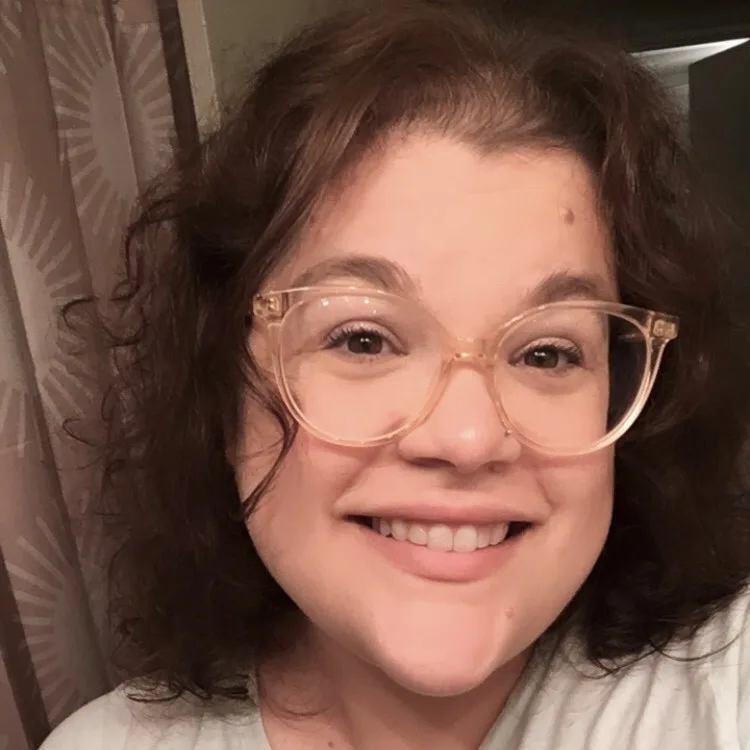
Hannah Gruen
Volunteer Engagement Coordinator
hgruen@theaftd.org
Sign Up To Receive AFTD Alerts
News & Events Near You

AFTD Applauds House Appropriations Committees for Support of NIH, Dementia Research, and Family Caregivers in FY 2026 Labor-HHS Bill
The Association for Frontotemporal Degeneration (AFTD) thanks the House and Senate Appropriations Committees for its release of…

Genetic FTD News Drives an Artist to Pick Up Paintbrush Again
Genetic FTD can impact family members in sometimes beautiful ways. The Osage Oracle recently told the story…

Dignity Care as an Essential Dementia Guidepost
Dignity care is the practice of ensuring a loved one maintains a sense of self and self-respect….
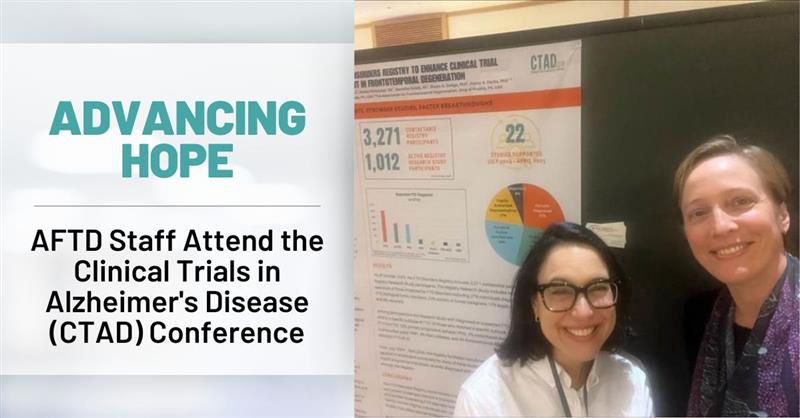
Advancing Hope: AFTD Staff Attend the Clinical Trials in Alzheimer’s Disease (CTAD) Conference
Dr. Penny Dack’s, AFTD’s Chief Scientific Officer and President of the FTD Disorders Registry, and Dr. Shana…

Memory Care That May Slow Dementia Decline
Memory care snapshot: As Robin Latimer lined up her putt on the portable green at Alice’s Clubhouse,…

Advancing Hope: AFTD and partners Award $2.1 Million in New FTD Diagnostic Biomarkers Initiative
AFTD currently has six active research funding programs to support FTD research at all stages, from discovery…

From Sean 1.0 to Sean 2.0: One Couple’s FTD Journey
When Sean Durbin noticed he was struggling to find the right words during conversations, he knew something…
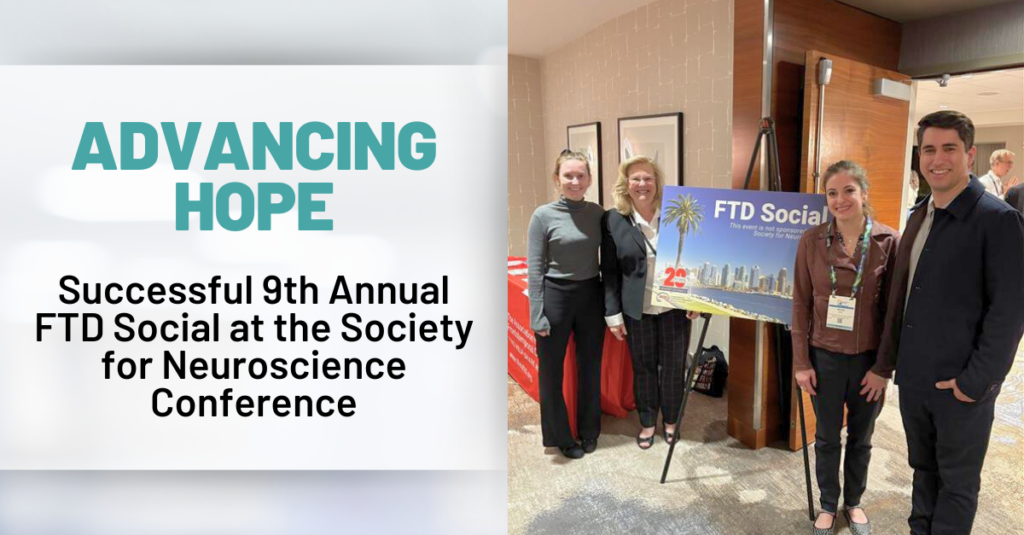
Advancing Hope: Successful 9th Annual FTD Social at the Society for Neuroscience Conference
Thank you to everyone who attended the 9th Annual FTD Social, hosted by AFTD at the Society…
Dear HelpLine: AFTD’s New Genetic Counseling and Testing Recommendation
Dear HelpLine, I recently heard about the new recommendation that all people diagnosed with FTD should be…

International Consortium Demonstrates Effectiveness of Large-Scale Protein Database in Study
An article published in Nature Medicine demonstrates the effectiveness of a large-scale dementia protein database composed of…


